


TL;DR
- The Uluru Base Walk is a 10.6 km circuit around the full perimeter of the rock, taking 3 to 4 hours
- Graded easy to moderate: mostly flat, well-marked, no technical terrain
- Best started before 7:00 am in summer (November to March); before 9:00 am in cooler months
- Pack at least 2 to 3 litres of water per person, SPF 50+ sunscreen, a hat, and comfortable shoes
- Five main sections: Mala Walk, North-east Face Walk, Kuniya Walk, Lungkaṯa Walk, and Liru Walk
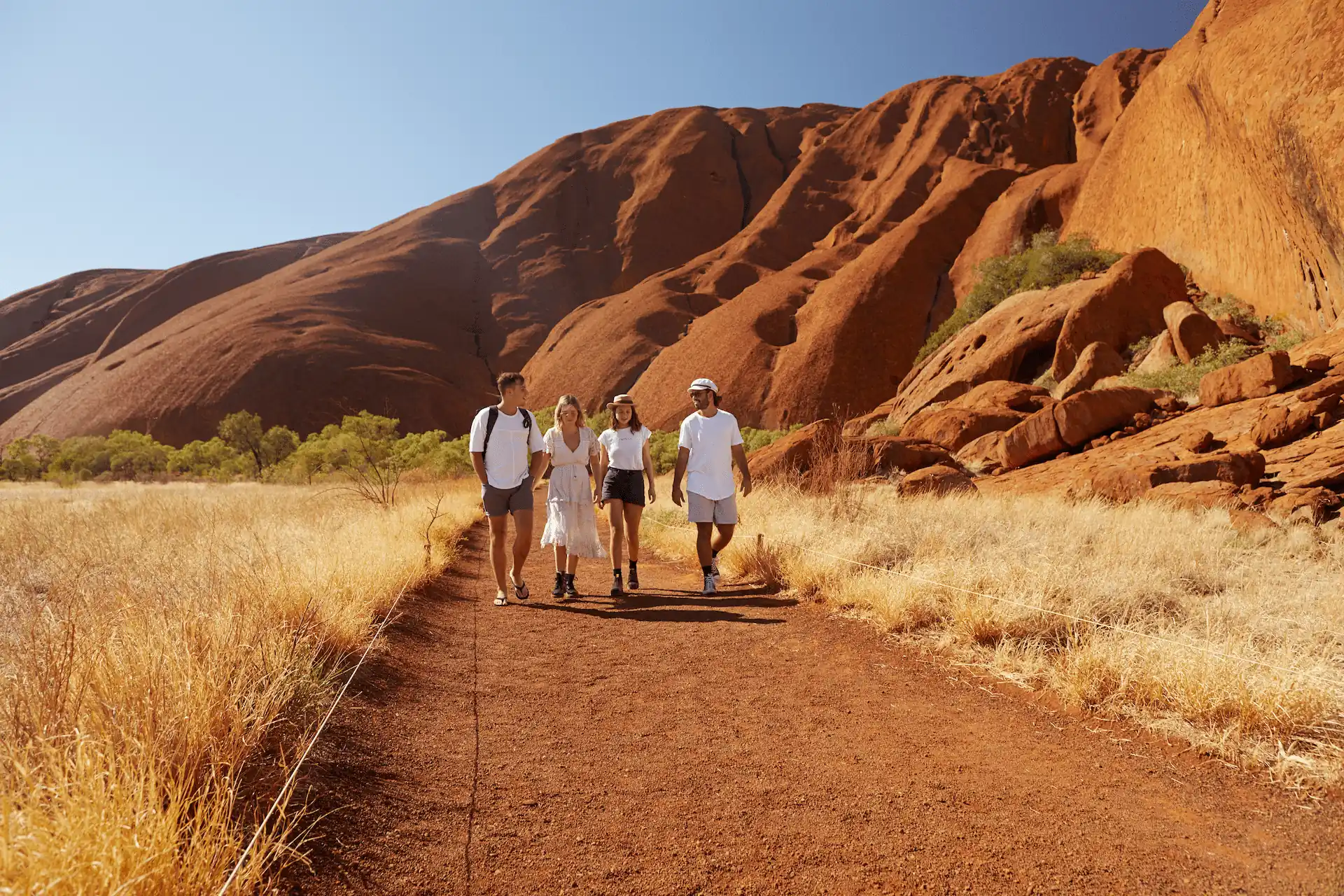
Most visitors see Uluru from a car park or a designated viewing area. The Uluru Base Walk changes that. It’s a 10.6 km circuit inside Uluṟu-Kata Tjuṯa National Park, Northern Territory, that takes you around the full perimeter of the rock. Close enough to touch. Close enough to see the rock art, the waterholes, and the formations that aren’t visible from any road.
The walk is graded easy to moderate. It’s mostly flat and well-marked. There’s no technical terrain. What makes it demanding is the distance and, depending on when you go, the heat. This guide covers what you need to know before you start.
Before the Walk
How Hard Is the Uluru Base Walk?
Most reasonably fit adults can do it without much preparation. If you’re not used to walking 10 km or more, or you’re planning to visit in summer (November to March), take it more seriously.
The heat is the main risk. Temperatures in the Red Centre regularly exceed 40 degrees C in summer. Even in shoulder season, the midday sun is intense. Dehydration and heat exhaustion are real concerns if you underestimate either.
If your fitness is low, some light preparation helps. Walk for 30 to 60 minutes each day for a week or two before your trip. Get used to walking in heat if you can. On the day, pace yourself. Take breaks in whatever shade the rock face provides. Watch for the signs of heat exhaustion: dizziness, headache, nausea, or suddenly stopping to sweat.
If you feel unwell on the walk, stop and call for help. Rangers patrol the area regularly.
What to Pack
The base walk is in an exposed desert environment with no shops, no cafes, and limited shade. Don’t arrive unprepared.
Essential items:
- Water: at least 2 litres per person. Parks Australia recommends 1 litre per hour in hot conditions.
- Sunscreen: SPF 50+ with high UV protection. Reapply every 90 minutes.
- Hat: broad-brimmed gives better protection than a cap.
- Sunglasses with UV protection.
- Sun-protective clothing: long sleeves are worth it in full sun.
- Footwear: comfortable walking shoes with ankle support. Not sandals.
- Snacks: energy is harder to manage on an empty stomach over 3 to 4 hours.
- Small first aid kit: blister pads, bandages, any personal medication.
Visit the Cultural Centre First
Before you walk around Uluru, visit the Uluru-Kata Tjuṯa Cultural Centre. It takes 30 to 60 minutes and gives you real context for what you’re about to see.
The walk passes through sites of significant cultural and spiritual importance to the Anangu people. Without that background, you see an impressive rock. With it, you understand why specific formations, waterholes, and caves carry the meaning they do.
Best Time to Start the Walk
- Summer (November to March): Start no later than 6:30 to 7:00 am. Parks Australia recommends finishing before 11:00 am. The park opens 30 minutes before sunrise.
- Cooler months (April to October): Starting between 7:00 am and 9:00 am works well. The afternoon is manageable but still warm.
- Late afternoon (April to September only): Some walkers start around 3:00 pm to 4:00 pm and finish at dusk. This works in winter but isn’t recommended in summer.
The park gates open 30 minutes before sunrise and close at sunset. Don’t start a walk you can’t finish before dark.
The Walk: Sections of the Uluru Base Walk
The Uluru Base Walk is divided into five main sections. You can do the full circuit in one go or access individual sections from separate car parks.
Mala Walk (approximately 2 km return, 45 to 90 minutes)
The Mala Walk runs along the northern face of Uluru from the Mala car park. This section has the highest concentration of rock art and cultural sites on the base walk. A free ranger-guided tour departs from the Mala car park daily, covering the geology, Anangu stories, and cultural significance of what you’re seeing.
Tour schedule:
- October to April: 8:00 am daily
- May to September: 10:00 am daily
You can also walk this section independently.
Facilities: Toilets at the Mala car park. The first 500 metres is wheelchair accessible.
North-east Face Walk (approximately 1.5 km, 30 to 45 minutes)
Moving east from Mala, this section takes you along the less-visited northern and eastern face. The formations here are more angular and striated, and the viewing angle changes significantly as you round the eastern end. Fewer people come this far, which makes it worth the walk.
Facilities: No toilets on this section.
Kuniya Walk to Muṯitjulu Waterhole (approximately 1 km return, 30 to 45 minutes)
The Kuniya Walk leads to Muṯitjulu Waterhole, a permanent waterhole on the southern face that supports rock wallabies, birds, and other wildlife. The waterhole has deep spiritual meaning in Anangu culture and is associated with the Kuniya (woma python) creation story. The path also passes through a cave with rock art paintings.
Facilities: Toilets at the Kuniya car park.
Lungkaṯa Walk (approximately 1 km, 20 to 30 minutes)
This short section on the southern face connects the Kuniya area to the western side. It’s the quietest part of the circuit. On clear days, it gives good views back across the plain toward Kata Tjuta.
Facilities: None on this section.
Liru Walk (approximately 4 km one way, 1 to 1.5 hours)
The Liru Walk connects the Cultural Centre to the Mala car park along a separate trail that runs through desert scrub. It’s useful if you want to walk from the Cultural Centre to the rock rather than driving. The path gives you a different approach and a sense of the surrounding country before you reach Uluru.
Facilities: Toilets at both ends (Cultural Centre and Mala car park).
Base Walk Sections at a Glance
| Section | Distance | Time | Toilets |
| Mala Walk | 2 km return | 45 to 90 mins | Yes (Mala car park) |
| North-east Face Walk | 1.5 km | 30 to 45 mins | No |
| Kuniya Walk to Muṯitjulu Waterhole | 1 km return | 30 to 45 mins | Yes (Kuniya car park) |
| Lungkaṯa Walk | 1 km | 20 to 30 mins | No |
| Liru Walk | 4 km one way | 1 to 1.5 hrs | Yes (both ends) |
Photography Opportunities
The base walk gives you angles of Uluru that you won’t find from any viewing area or road.
Best spots:
- Eastern face, near the Mutitjulu junction: The low-angle view from the east at sunrise gives you the full height of the rock with few other people around.
- Muṯitjulu Waterhole: Reflections in still water on calm mornings. Also a good spot for bird photography.
- Rock art caves (Mala and Kuniya sections): Close-up detail is possible here. Check signage before photographing, as some art is sacred and photography may be restricted.
- Western face in late afternoon: The light turns deep orange and the crowds thin out compared to the main viewing areas.
Practical tips:
- The first 30 minutes after sunrise and the hour before sunset give the most dramatic light on the rock.
- Shoot from low angles to make the height of the formations more apparent in photos.
- Follow any Parks Australia signage at cultural sites before photographing.
After the Walk
Stretching
Ten kilometres in desert heat will leave your legs stiff. A few minutes of stretching before you get back in the car makes a real difference, especially if you’re heading to Kata Tjuta the next day.
Focus on:
- Calf stretch: heel flat to the ground, lean against a wall or vehicle
- Quad stretch: standing, pull your heel toward your glutes
- Hip flexor stretch: a low lunge position, hold 20 to 30 seconds per side
- Lower back: seated with both knees pulled to your chest
Even five minutes of this reduces next-day stiffness, which matters if you’re planning more walking.
Conclusion
The Uluru Base Walk is the closest most people will get to understanding what Uluru actually is. From the road or a viewing area, it’s an extraordinary sight. On foot, at the base, something shifts. The scale becomes real. The detail becomes visible.
Plan it early, pack properly, and you’ll have one of the better walking experiences in Australia.
Ready to go? Book a guided walk to start your adventure, or check out our Uluru Tours.
FAQ
How long is the Uluru Base Walk?
The full circuit is 10.6 km. Most walkers take 3 to 4 hours, depending on pace and stops. Individual sections can be done separately in 45 minutes to 1.5 hours.
What should visitors prepare before the walk?
Visit the Uluru-Kata Tjuṯa Cultural Centre to understand the cultural context of what you’re walking through. Check the weather forecast. Plan to start early, especially in summer. If you’re walking independently, let someone know your plans before you head out.
What to bring on the Uluru Base Walk?
At minimum: 2 to 3 litres of water per person, SPF 50+ sunscreen, a broad-brimmed hat, sunglasses, sun-protective clothing, and comfortable walking shoes. A snack and a basic first aid kit are also worth including.
What is the best time to start the Uluru Base Walk?
In summer (November to March): start by 6:30 to 7:00 am and finish before 11:00 am. In cooler months (April to October): starting between 7:00 am and 9:00 am works well. Late afternoon starts (from 3:00 pm) are only suitable in winter.
How many sections are there in the Uluru Base Walk?
Five main sections: the Mala Walk, North-east Face Walk, Kuniya Walk to Muṯitjulu Waterhole, Lungkaṯa Walk, and Liru Walk. You can do the full circuit in sequence or access individual sections from separate car parks.
Other Tips & Articles

Check out our other Uluru Tours


